
Modern video delivery
Explore supported HTTP/3 workflows for live MPEG-TS and MP4 VOD alongside existing delivery methods.
Explore HTTP/3 →A native C/C++ streaming platform for live IPTV, movies, series, catch-up TV and video delivery. Deploy the existing platform, integrate it into your product, or discuss commercial source-code and OEM licensing with Ezhometech.
Combine established IPTV and VOD workflows with a lightweight native server architecture and modern HTTP/3 delivery options.
Explore supported HTTP/3 workflows for live MPEG-TS and MP4 VOD alongside existing delivery methods.
Explore HTTP/3 →Manage live channels, movies, series, EPG, catch-up TV, ingestion and multi-node deployments.
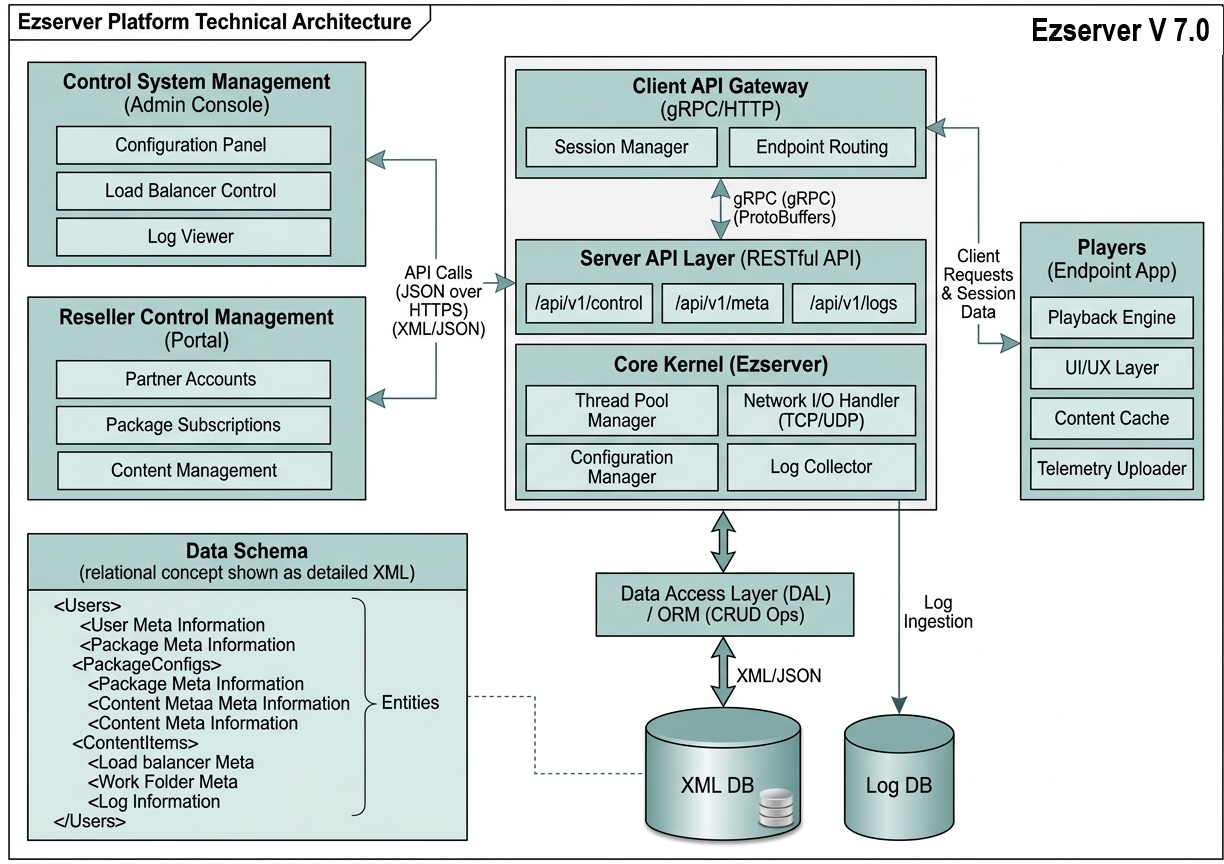
View platform features →Core streaming functions run without requiring Apache, Nginx, PHP, Java or an SQL database system.
Read about the architecture →Ezserver Developer & OEM options are designed for companies that need streaming infrastructure for their own applications, services, or branded solutions.
Discuss API integration, deployment requirements, technical documentation, sample workflows and the best licensing option for your application.
Discuss developer integration →Explore commercial OEM, reseller and white-label arrangements for software vendors and system integrators serving their own customers.
Explore partner opportunities →For projects requiring deeper customization, request information about commercial source-code licensing, permitted modifications, support and update options.
Request source-code licensing details →Tell us about your application, deployment environment, expected workload and licensing requirements. We can discuss a suitable commercial arrangement.
Deploy on Linux or Microsoft Windows, begin with a single server, and expand to multi-node load balancing as service requirements grow.
Try Ezserver, compare the available licenses, or contact Ezhometech about developer integration, source-code access and OEM opportunities.
Share your streaming requirements and we will help you identify the appropriate next step.